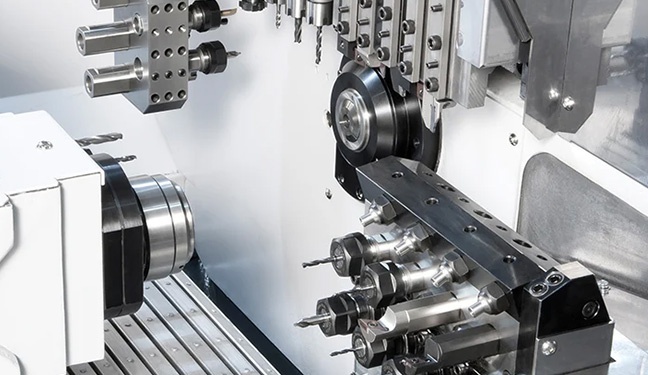


In the field of mechanical transmission, ball screws and lead screws (trapezoidal screws) are the two most common components for converting rotary motion into linear motion. Although they look similar, they differ fundamentally in their working principles, performance, and applications.
The following is a detailed comparative analysis of the two:
1.Difference in Core Working Principles
This is the most fundamental difference: the form of friction.
Ball Screw (Rolling Friction): The nut and screw are filled with revolving balls. When the screw rotates, the balls roll within the tracks, much like a bearing. This motion greatly reduces resistance.
Trapezoidal Screw (Sliding Friction): The nut (usually bronze or engineering plastic) directly contacts the screw thread and slides. This is similar to the process of screwing a bolt into a nut.
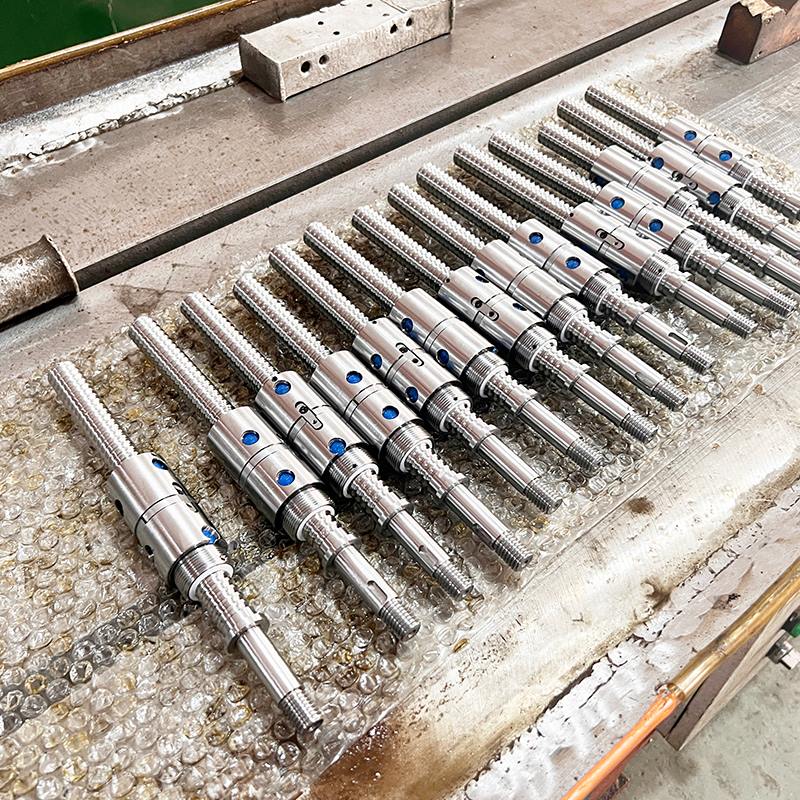
2.Performance Comparison
| Characteristic indicators | Ball Screw | Lead Screw |
| Transmission efficiency | 90% - 95% | 20% - 70% |
| Accuracy and repeatability | High precision | Low accuracy |
| Load capacity | High performance, suitable for heavy-load continuous operation | Relatively weak, suitable for light load or intermittent operation. |
| Running speed | It can operate at high speeds and generates little heat. | Speed is limited; high speeds are prone to causing high-temperature wear. |
| Self-locking | Non-locking | It has self-locking properties |
| Noise level | The ball bearing circulation will produce a slight sound. | It runs very quietly (no ball bearing noise). |
| Cost Price | Expensive | Cheap |
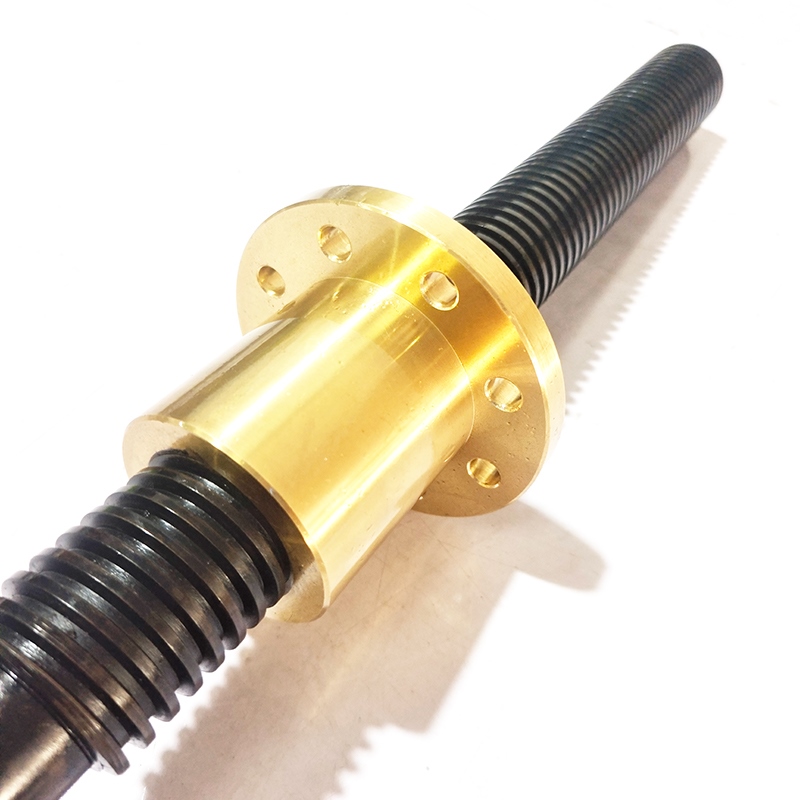
3. In-depth Analysis of Advantages and Disadvantages
Ball Screw: Pursuing Ultimate Performance
Advantages: Due to extremely low friction, it is very energy-efficient and its motion is extremely smooth, with almost no "creeping" phenomenon. Preload technology completely eliminates backlash, making it the core component for high-precision machining in CNC machine tools.
Disadvantages: High price; lacks self-locking; if used in the vertical direction (Z-axis), the motor must be equipped with a brake, otherwise the load will fall directly due to gravity in the event of a power outage.
Trapezoidal Screw: High Cost-Effectiveness and Safety Choice
Advantages: The biggest advantage is its self-locking function. In many vertical lifting applications, it does not require an additional braking system. Furthermore, it is more resistant to dirt and, due to its sliding contact, operates more quietly than a ball screw.
Disadvantages: High heat generated by friction limits its operating frequency (duty cycle). Continuous high-speed operation can cause the nut to wear rapidly or even melt.
4. How to Choose?
Choose a ball screw if your application requires:
High-precision positioning (e.g., CNC engraving machines, semiconductor equipment).
High efficiency, long-term continuous operation (e.g., industrial automated production lines).
Heavy load bearing (e.g., large mechanical presses).
Choose a trapezoidal lead screw if your application requires:
Low budget (e.g., 3D printer DIY, simple actuators).
Vertical loads requiring self-locking (e.g., lectern lifts, manual adjustment mechanisms).
Quiet operation, no lubrication required (suitable for medical and food equipment when using Teflon or polymer nuts).
In summary, ball screws are synonymous with "precision and efficiency," while trapezoidal lead screws offer "economy and robustness." Balancing budget, accuracy requirements, and load characteristics is key to deciding which lead screw to use when designing mechanical systems.
Please Read On, Stay Posted, Subscribe, And We Welcome You To Tell Us What You Think
Get Directions

Copyright @ 2024 Nanjing Chunxin Automation Equipment Co., Ltd., Limited. All Rights Reserved.
 Network Supported